
Currently Empty: $0.00



Blog
The Benefits of Learning TypeScript for Web Development
the high-stakes world of USA tech in 2026, the question is no longer “Should I use TypeScript?” but “Why haven’t I switched yet?” As web applications become increasingly complex, relying on plain JavaScript can feel like building a skyscraper without a blueprint.
TypeScript—essentially JavaScript with a “safety harness”—has become the industry standard for professional development. From the startups of Silicon Valley to the enterprise giants of the East Coast, TypeScript is the secret weapon behind stable, scalable, and bug-free code. Let’s explore why this language is the most valuable skill you can add to your toolkit this year.
1. Catching Bugs Before They Catch You
The single greatest benefit of TypeScript is its ability to find errors while you are still writing the code. In plain JavaScript, you might accidentally try to perform a math operation on a string, only to find out when the app crashes for a user in production.
How it works:
TypeScript uses Static Typing. This means you define what kind of data a variable can hold (e.g., a number, a string, or a specific object). If you try to pass the wrong type of data, your editor will literally highlight the mistake in red before you even save the file.
2. The “Supercharged” Developer Experience
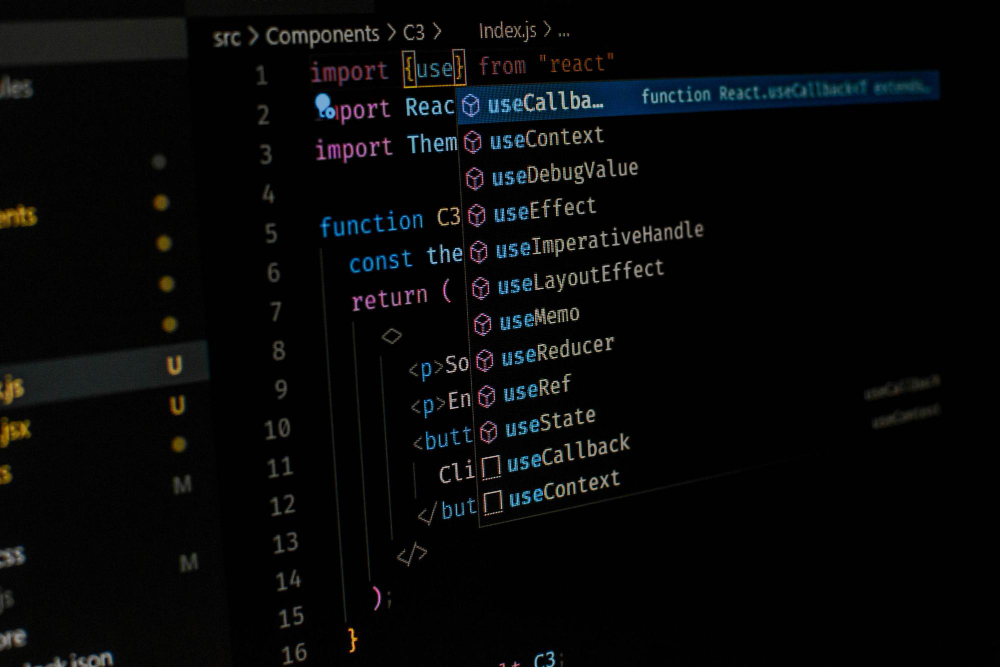
Have you ever jumped into a new project and spent hours trying to figure out what data a specific function needs? TypeScript turns your IDE (like VS Code) into a smart assistant.
- IntelliSense: You get incredibly accurate auto-completion.
- Self-Documentation: The types themselves act as documentation. You can see exactly what a function expects just by hovering over it.
Fearless Refactoring: Want to rename a variable across 50 files? TypeScript ensures that every single reference is updated correctly, or it will alert you to the ones that aren’t..
| Feature | JavaScript (Plain) | TypeScript |
|---|---|---|
| Error Discovery | During Runtime (by users) | During Development (by you) |
| Code Completion | Basic / Guesswork | Advanced / Context-Aware |
| Onboarding Speed | Slow (manual exploration) | Fast (types explain logic) |
| Maintenance | Higher technical debt | Higher long-term stability |
3. Better Collaboration for Growing Teams
In the USA, where remote and hybrid work is the norm, clear communication through code is vital. TypeScript acts as a “contract” between developers.
When you define an Interface for a User object, every other developer on your team knows exactly what properties a user has (id, email, name). This eliminates the “What does this object look like again?” Slack messages and prevents team members from accidentally breaking each other’s code.
4. Seamless Integration with Modern AI Tools
In 2026, AI-assisted coding (like GitHub Copilot) has become standard. Here is a “pro” secret: AI is much better at writing TypeScript than JavaScript.
Because TypeScript provides clear structures and types, AI models can understand the context of your application much more accurately. This leads to better code suggestions and fewer “hallucinations” from your AI tools, essentially making you a faster, more efficient developer.
Industry Fact: According to 2026 developer surveys, TypeScript developers in the US earn an average of $148,000 per year, compared to $110,000 for those specializing only in plain JavaScript.
5. It’s Just JavaScript (Only Better)
One of the best things about TypeScript is that it is a superset of JavaScript. This means:
- Any valid JavaScript code is already valid TypeScript.
- You can adopt it incrementally. You don’t have to rewrite your whole app; you can start by adding types to just one file.
- It compiles down to clean JavaScript that runs in any browser, from the latest iPhone to an older desktop.
Conclusion: The Career-Changing Choice
Learning TypeScript isn’t just about adding a new line to your resume; it’s about changing the way you think about code. It moves you from “hoping it works” to “knowing it works.”
As we move further into 2026, the gap between hobbyist and professional development is defined by the tools we use to ensure reliability. TypeScript is the bridge that gets you there.